Paid Ads●●Nick Ostroff
Meta Ads Copy for Furniture Retailers
How to write Meta ads copy that actually moves furniture, with hooks, offers, and format tips for sofas, sectionals, and bedroom sets.
Good Meta ads copy for furniture retailers leads with the product and a reason to act now: a specific piece, a real price or offer, and a short line that answers "why this, why now." Keep the primary text under three lines, put the offer in the headline, and let the photo carry the room. See more on our Furniture marketing hub.
Furniture is a considered, visual purchase, so your copy's job isn't to explain everything. It's to stop the scroll, name the piece and the deal, and get the click to a page that finishes the sale. Below are the questions we hear most from furniture store owners running Meta ads.
What makes furniture ad copy actually work?
The copy that works is short, specific, and tied to one product or one offer. Vague brand statements like "quality furniture for your home" don't sell. A named piece with a price and a reason to buy does.
We build most furniture ads around four elements: a hook (the first line that earns attention), the product (what it is and one benefit), the offer (price, discount, financing, or free delivery), and the action (shop the sale, see it in your room, visit the showroom).
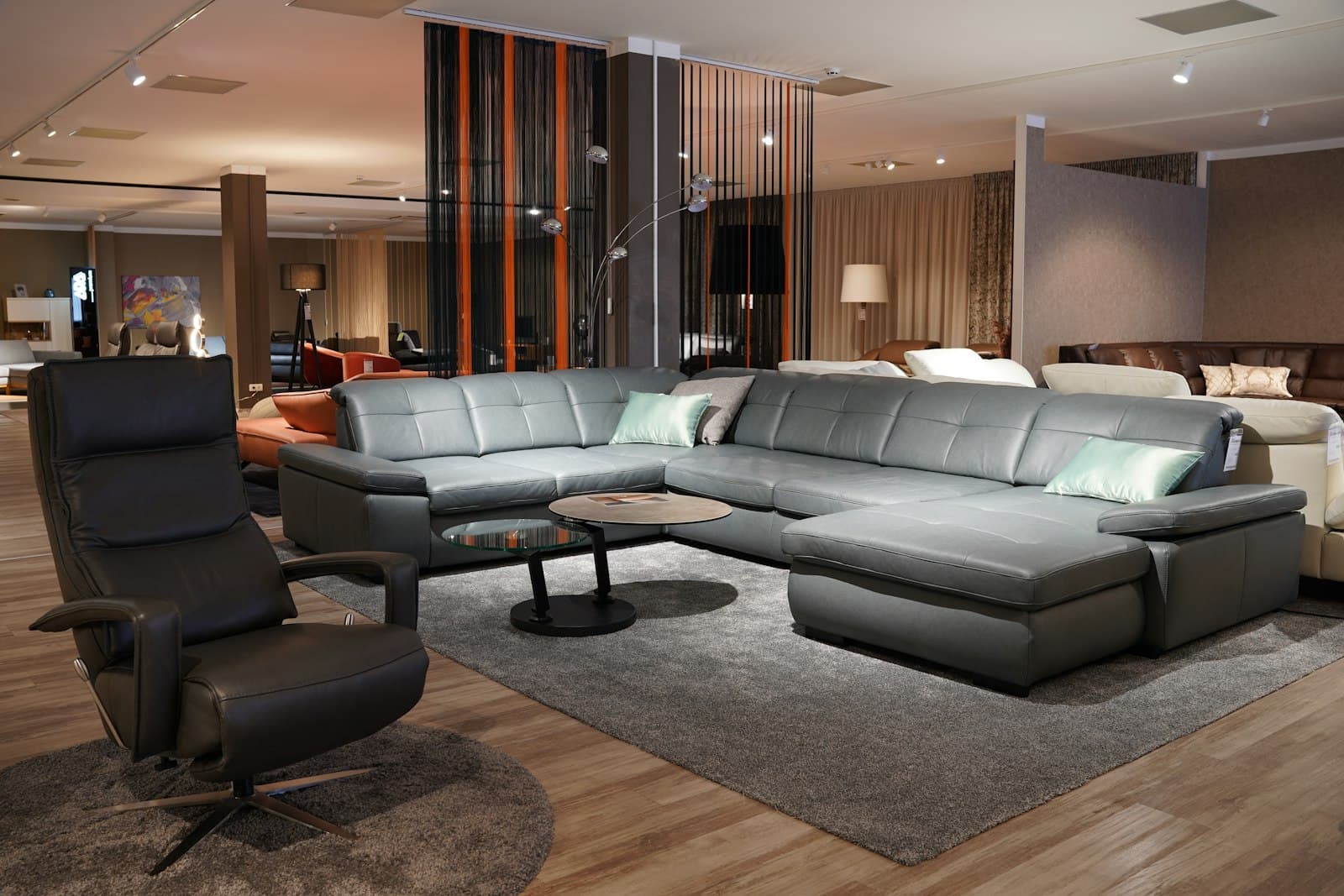
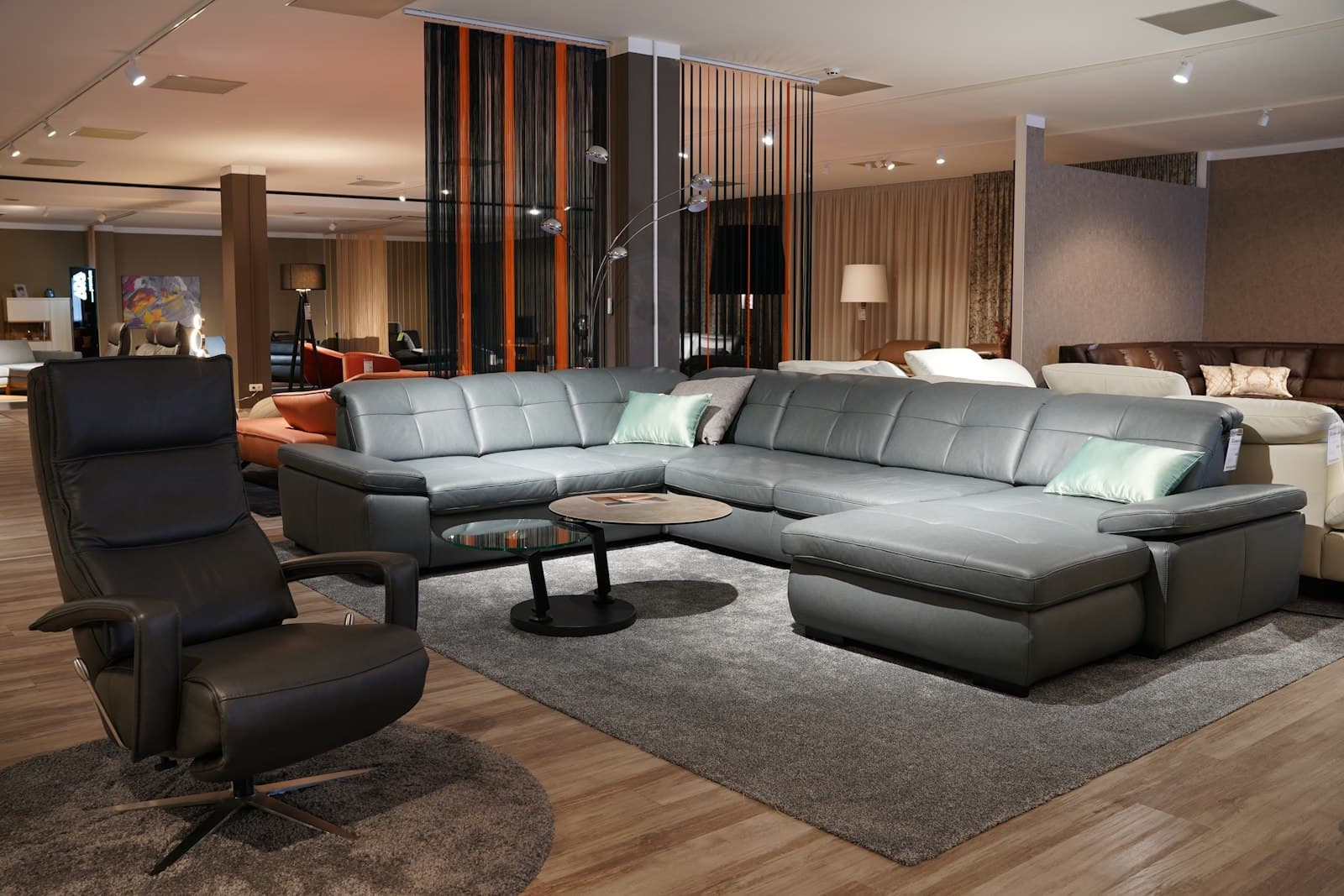
The image or video does the heavy lifting on a furniture ad, so copy should support it, not repeat it. If the photo shows a gray sectional, the text shouldn't say "gray sectional" — it should say "seats seven, delivers in a week, $400 off through Sunday."
A few lines that tend to perform:
- "The sectional everyone asks about. $400 off this weekend."
- "0% financing for 24 months on any bedroom set."
- "Delivered and set up in 5 days — no waiting three months."
- "Floor model clearance. When it's gone, it's gone."
How do you write copy for sectional sofa sales?
Sectionals sell on comfort, size, and configuration, so lead with the practical detail a buyer is weighing: how many people it seats, whether it fits their space, and how fast it arrives. Then attach the offer.
People shopping sectionals are usually solving a problem — a growing family, a new living room, a couch that's falling apart. Copy that names the situation converts better than copy that just describes fabric. "Enough room for movie night with the whole family" beats "premium performance fabric."
Use the headline for the offer and the primary text for the fit. Example primary text: "Modular sectional you can rearrange any time. Stain-resistant, pet-friendly, and it ships in a week." Headline: "$500 Off Sectionals — Ends Sunday."
Carousel ads work well here because you can show the same sectional in different layouts or colors, with one card per configuration. That answers the "will it fit my room" question inside the ad.
What copy angles work for bedroom furniture?
Bedroom furniture copy works best on two angles: the complete-the-room bundle and the upgrade-your-sleep story. Both give the buyer a clear reason to act instead of browsing.
Bundles are an easy win. "Complete queen bedroom set — bed, two nightstands, dresser — $1,899" gives a price anchor and removes decision fatigue. Financing lines also pull well on bedroom sets because the ticket is higher: "As low as $79/month."
For mattresses and beds, comfort and delivery speed matter more than specs. "Sleep on it tonight — delivered same week" answers a real objection. Save the coil counts and material details for the landing page.
Seasonal framing helps too. Back-to-school, new-apartment, and end-of-year clearance all give bedroom copy a natural deadline that makes the offer feel real instead of permanent.
How do you set up Meta ads for a furniture store?
Start with a clean account structure: a prospecting campaign to reach new buyers and a retargeting campaign to bring back people who viewed products but didn't buy. Furniture has a long consideration window, so retargeting usually drives a big share of sales.
Make sure the Meta pixel and, ideally, the Conversions API are firing on view content, add to cart, and purchase. Without accurate tracking, you're guessing at what copy and creative actually sell, and furniture's slow buying cycle makes guessing expensive.
If you run a catalog, set up Advantage+ shopping and dynamic product ads so Meta can match specific pieces to the people most likely to buy them. Dynamic ads carry short template copy, so your job there is writing one strong offer line that works across the whole catalog.
For most single-location and regional furniture stores, we see monthly Meta budgets in the $2,000–$10,000 range, scaling with delivery radius and inventory. What matters more than the number is spending enough to exit the learning phase — usually a handful of conversions per week per ad set. If you'd rather have someone build and run this, that's what Pixel – Manager is for.
How much should furniture stores budget for Meta ads?
Most furniture retailers we work with run between $2,000 and $10,000 per month on Meta, and the right number depends on your average order value and how far you deliver. A store with a $1,500 average ticket can afford a higher cost per lead than one selling $300 accent pieces.
A reasonable starting split is 60–70% to prospecting and 30–40% to retargeting once you have enough traffic to retarget. Early on, weight prospecting so the retargeting pool fills up.
Don't spread a small budget across ten ad sets. Two or three ad sets with real budget will exit the learning phase and give Meta enough data to optimize. See our pricing for how management fees fit alongside ad spend, or run a Google Ads audit if you're also spending on search.
Should you write different copy for prospecting vs retargeting?
Yes. Prospecting copy introduces a product and a reason to look; retargeting copy closes with urgency and reassurance because those people already know you.
Prospecting example: "Meet the sectional that fits big rooms and small budgets. See it in five colors." You're earning attention from someone who's never heard of you.
Retargeting example: "Still thinking about that sofa? It's $300 off through Sunday, and delivery is free." Now you can name the objection, add urgency, and remind them of the specific piece they viewed. Dynamic retargeting that shows the exact product they browsed, paired with a short offer line, is usually the highest-return part of a furniture Meta account.
If you want a second set of eyes on your copy and structure without handing over the account, Pixel – Advisor coaches owners and in-house marketers through it.
Frequently asked questions
How long should Meta ad copy be for furniture?
Keep primary text to one to three short lines, and put your strongest offer in the headline. Most people read the first line and look at the image. Longer copy occasionally works for high-ticket custom pieces where buyers want detail, but test it against a short version first.
Do I need video, or do photo ads work for furniture?
Both work. High-quality lifestyle photos of a piece staged in a real room convert well and cost less to produce. Short video — a slow pan around a sectional or a 10-second room walkthrough — often beats static in prospecting. Run both and let the numbers decide.
How fast will Meta ads produce furniture sales?
Expect a learning period of two to four weeks before performance stabilizes, and remember furniture buyers often take days or weeks to decide. Judge results over a full month, and watch add-to-carts and view-content events early as signals before purchases catch up.
What offer converts best for furniture ads?
Financing, free delivery, and time-limited dollar discounts all perform. Which wins depends on your margins and buyer. Percentage-off tends to feel smaller on big tickets, so "$500 off" usually beats "15% off" on a sectional even when the math is similar.
If you want help turning these angles into ads that sell your actual inventory, we're happy to take a look. Start with a free consultation, and see the rest of our Furniture marketing resources for the full picture on ads, budget, and tracking.