Personal●●Updated ●Nick Ostroff
From Sofas to Pixels: My Entrepreneurial Journey
I’m Nick Ostroff, the guy who made the jump from cozy couches to the world of pixels and code. Now, that might sound like a drastic transition, and it indeed…
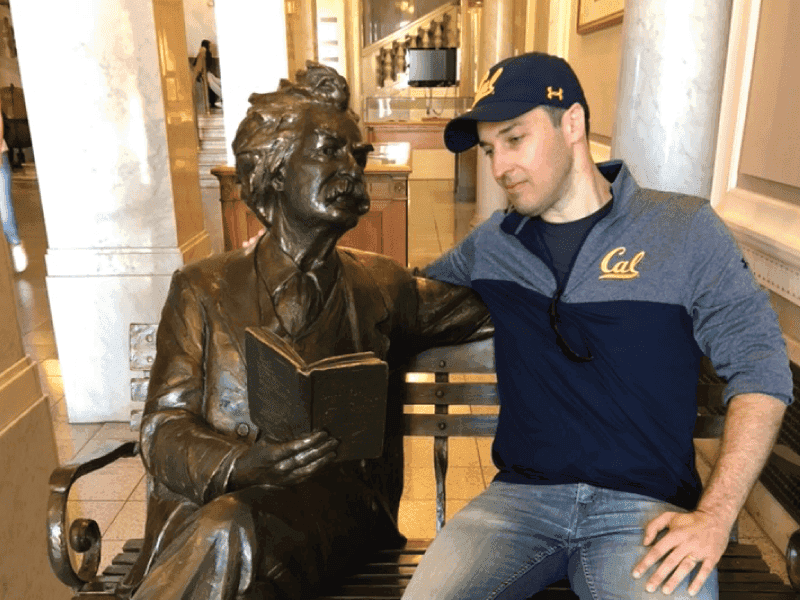
I’m Nick Ostroff, the guy who made the jump from cozy couches to the world of pixels and code. Now, that might sound like a drastic transition, and it indeed was, but the entrepreneurial spirit coursing through my veins never made it feel like a chore. Today, I run Pixelocity, a digital marketing agency based out of Manhattan Beach. But before the algorithms and A/B testing, it was all about foam, fabric, and custom-built furniture.
Back in 1998, fresh out of UC Berkeley, my friends Jim, Peter, and I set out to take the LA furniture scene by storm with our startup, The Sofa Company. Why furniture, you ask? Well, besides the fact that everyone needs a comfortable place to sit, we saw a gap in the market. Everyone seemed to be selling the same, run-of-the-mill furniture. We knew we could offer something unique, customizable, and most importantly, comfortable.
ROLLER COASTER RIDES: MISTAKES, SUCCESSES, AND SOFA STORIES
Our journey wasn’t a smooth ride. Picture three ambitious yet clueless youngsters trying to run a business; it’s comical, really. There were mistakes, so many of them, but there were also victories that kept us going. The learning curve was steep, but we scaled it, step by step. Over the years, we honed our instincts, sharpened our skills, and managed to turn The Sofa Company into a brand synonymous with quality and comfort.
A FORK IN THE ROAD: THE DECISION TO SCALE DOWN
However, time, as it always does, brought change. Jim, Peter and I decided to scale down the business in 2019 to follow other personal pursuits. This was not an easy decision by any stretch. The Sofa Company was not just our business; it was our labor of love, our brainchild, and for a significant part of our lives, our identity. Scaling down felt like asking a piece of myself to step aside. But as I’ve learned, entrepreneurship is as much about knowing when to pivot as it is about persisting.After investing so much of myself into our first venture, I was at a crossroads.
FROM DAUNTING TO DOING: THE BIRTH OF PIXELOCITY
Starting another business so soon felt daunting. But, as they say, once an entrepreneur, always an entrepreneur. I couldn’t shake off the desire to create, build, and contribute. And that’s how Pixelocity came into being. Throughout our journey with The Sofa Company, I’d developed a fascination with digital marketing. I saw how it could be leveraged, not just for big corporations with vast budgets, but also for small businesses trying to find their footing.
I learned firsthand how the right digital strategies could propel a business, but also how a misstep could spell disaster. I saw small business owners struggle with the constantly changing digital landscape. It was overwhelming, confusing, and downright intimidating. I knew then what my next venture would be: a digital marketing agency that makes navigating this tricky landscape simpler for small businesses.
NURTURING DREAMS: EMPOWERING SMALL BUSINESSES
Now, I get to share my experience, successes, failures, and knowledge with small business owners, equipping them with the tools they need to succeed in the digital world. We at Pixelocity work day in and day out to ensure our clients can focus on what they do best while we handle their digital presence.
LESSONS LEARNED: EMBRACING THE JOURNEY
Looking back, I realize every experience, every triumph, every failure, has been invaluable. Each venture has shaped me, taught me, and brought me to where I am today. Life is full of surprises, twists, and turns, and sometimes, those turns take you from selling sofas in LA to running a digital marketing agency in Manhattan Beach. And what a ride it has been!
What more than twenty years of running businesses taught me about marketing
The story above is the fun part. The useful part is what it taught me, because every lesson below came from spending my own money on marketing that had to pay for itself. If you're a small business owner doing your own marketing, these are the ones I'd hand you first.
1. Know what a customer is worth before you spend a dollar. At The Sofa Company we knew the average order and the margin on it, so we knew exactly how much we could pay to acquire a customer. Most small businesses I meet are running ads without that number. Start there. It decides your budget, your bids, and whether a campaign is working.
2. The click is not the goal. The phone call is. A furniture store doesn't make money from showroom traffic; it makes money from people who buy a sofa. The same is true online. Optimize for calls, forms, and booked appointments, not for clicks and impressions.
3. Track everything, or you're guessing. For years we couldn't say which ad produced which sale, and we made budget decisions on gut feeling. Today there's no excuse. Call tracking, form tracking, and conversion data tied back to the keyword are what turn advertising into a system you can steer.
4. Send people to a page built for what they searched. A homepage asks visitors to figure out where to go. A page built around one service, with one clear next step, asks them to do one thing. That single change is often the biggest lever in a small business account.
5. Customization was our edge in furniture. Specificity is yours in ads. We won because customers could get exactly what they wanted. Online, the equivalent is an ad and a page that speak to the exact problem someone searched for, not a generic pitch for everything you do.
6. Know when to pivot. Scaling down The Sofa Company was the hardest decision I've made, and the right one. In marketing, the same discipline applies to campaigns, channels, and agencies that aren't producing. Sunk cost is not a strategy.
7. Keep learning, because the ground moves. Furniture retail changed slowly. Digital marketing changes every quarter. The owners who do well are the ones who keep learning their own numbers, whether they run the ads themselves or have someone run them.
The numbers behind these lessons
A few data points, with sources, that back up the advice above:
- 68% of online experiences begin with a search engine (BrightEdge, via Ahrefs). Picking the channel where customers already search is not a guess.
- The 2026 cross-industry Google Ads averages are a 6.64% click-through rate, $5.42 cost per click, 8.18% conversion rate, and $66.69 cost per lead, from an analysis of more than 13,000 search campaigns (WordStream, 2026). Know your own numbers against these before deciding an account is "working."
- Furniture has one of the lowest paid-search conversion rates of any industry at 2.99% (same WordStream data). I lived that: a sofa is a considered purchase, which is why tracking the whole path to the sale, not the click, mattered so much.
- 96.55% of web pages get zero traffic from Google (Ahrefs). Publishing a page is not the same as being found; the page has to answer a real search.
- In our own client work, rebuilding a personal injury firm's account around qualified calls produced 19% more qualified leads at 16% lower cost per lead, year over year at the same spend (Hassakis Law case study). That is lessons one through four applied in one account.
The mistakes I see small business owners make
- Judging Google Ads by cost per click instead of cost per booked job.
- Running ads with no call tracking, then wondering where the phone calls came from.
- Hiring an agency that reports clicks and impressions but never connects spend to actual customers.
- Spreading a small budget across every channel instead of winning one first.
- Treating the website as a brochure instead of the most important salesperson in the business.
Where to start if you're doing your own marketing
Pick one channel where your customers are already searching for what you sell, which for most service businesses is Google. Get tracking right before you scale spend. Build one page for your most profitable service. Then read your search terms every week and move budget toward what produces customers. If you'd like a coach in the room while you do it, that's what Pixel – Advisor is for. If you'd rather hand it off and get a monthly report you can actually understand, that's Pixel – Manager.
Let's connect the dots
Every venture, from sofas to pixels, taught me the same thing: marketing only matters when it produces customers you can count. If you want a clear read on where yours stands, book a free consultation. No pressure, no subscriptions, just straight answers from someone who has been in your seat.